Mike Petrow:
Once again, welcome back to the Everything Belongs podcast with Father Richard Rohr. Each season we’ve explored one of Richard’s books, this season we are taking a deep dive, chapter by chapter into the book, The Tears of Things. Of course, you don’t have to read along with us to listen to each fantastic episode and interview, and get something nourishing out of it, but hey, we’d love it if you did. Each episode we travel over to Richard’s house to discuss a chapter with him, and then we’re joined by a special guest who helps us live the teachings forward, by taking a deep dive and asking new questions that apply to our lives, to think about Richard’s teachings in new ways.
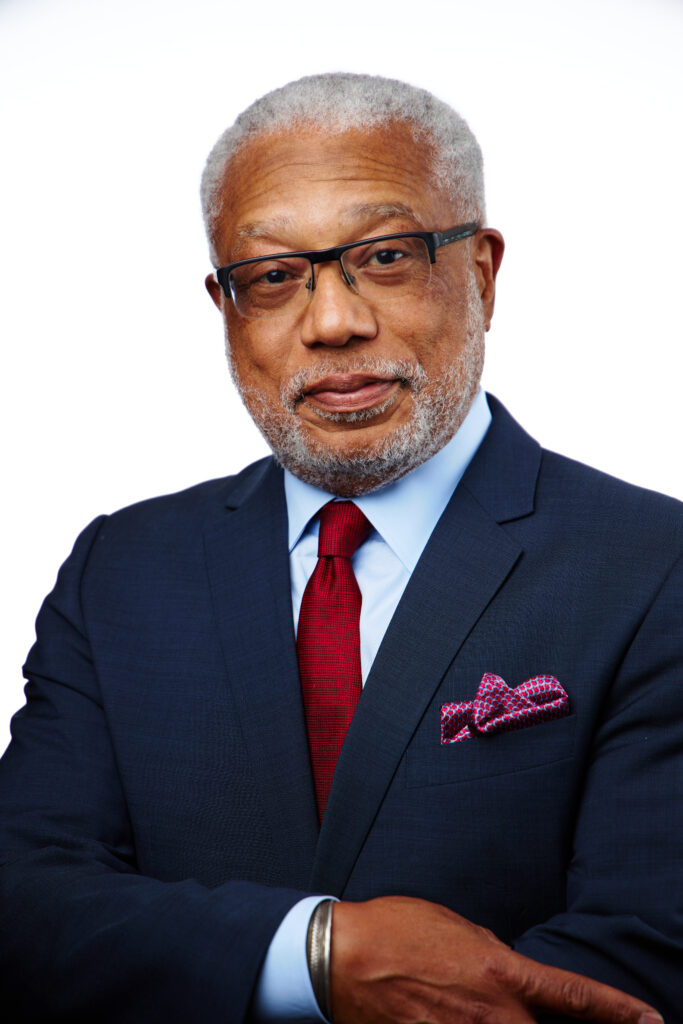
So, today, we’ll be talking about Chapter Five, Jeremiah: The Patterns That Carry Us Across. Jeremiah, who’s often known as the reluctant prophet, which is maybe something that a lot of us can relate to, Jeremiah models an intimate relationship with God and the transformation of the prophet from anger to lamentation into praise. Paul Swanson and I will be joined by the wisdom of one of my favorite conversation partners of all time, the Reverend Dr. Walter Fluker. Dr. Fluker is a Howard Thurman Scholar and a precious and respected friend of our dearly beloved late Dr. Barbara Holmes, and I have to tell you, Dr. B’s spirit was so present with us in this conversation in which Paul and I and Dr. Fluker teared up quite a few times. Dr. Fluker reminds us of the need to be dismembered in order to be remembered and that there’s no liberation without struggle.
In this discussion of Jeremiah, we explore the work of God as a trickster in our lives and the intimate invitation that God offers us when the prophetic is near. Finally, friends, and in the part that was most nourishing to me, we talk about the necessity of finding joy in our sadness and sadness in our joy.
So many of us live inside stories that are too small, and it’s a lot like walking through life with shoes that are just a little bit too tight. In this episode, I’d like you to think about how anger and joy are all different ways that you can be broken out of those far too small stories and step into the expansive story of love that wants to be constantly unfolding in your life.
From the Center for Action and Contemplation, I’m Mike Petrow.
Paul Swanson:
I’m Paul Swanson.
Carmen:
I’m Carmen Acevedo Butcher.
Drew:
And I’m Drew Jackson.
Mike Petrow:
And this is Everything Belongs.
Richard and Paul, as always, it is great to see you. We’re here to talk about the sobering Chapter Five, Jeremiah: The Patterns That Carry Us Across.
Richard, I’d love to start this conversation, believe it or not, by reading a passage from your book, but actually referencing a book that you reference in The Tears of Things. There’s a book called We Survive the End of the World: Lessons from Native America on Apocalypse and Hope written by Steven Charleston. Steven gives us the definition of the prophet that you referenced earlier in the book.
Richard Rohr:
Oh, yes. Yes.
Mike Petrow:
As I was reading this chapter-
Richard Rohr:
It’s one of the best.
Mike Petrow:
It’s so good. And as I was thinking about Jeremiah, I couldn’t help but think back to this.
Richard Rohr:
Oh, excellent. Go ahead.
Mike Petrow:
So here’s what Steven writes, “I need to say a word about the prophets themselves. Prophets do not arise out of a vacuum. They’re part of the apocalyptic process. They appear first as an early warning system within any culture at risk. They fulfill the classic role of the prophet as a herald of a vision of what is to come. Then, as the apocalypse becomes ever more real, they serve as teachers to instruct people about what to do to end the suffering and alter the course of destruction. Finally, they’re mystics who describe the future and guide people to find it within themselves. In carrying out these roles in the apocalyptic process, the prophet strives to stand on solid ground even while the earth beneath their feet is moving. That is prophets not only talk about the future, but the past. They ground their prophecy in the bedrock spiritual traditions of their people. They recall the ancient stories and covenants between the divine and human beings. They reinterpret ancient teachings and remind people of old promises. Prophets are immersed in tradition even as they talk about how that tradition will need to change to meet new apocalyptic challenges.”
Richard Rohr:
Brilliant.
Mike Petrow:
Gosh. If that’s not Jeremiah, I don’t know what is.
Richard Rohr:
That’s good.
Mike Petrow:
I think about Jeremiah as you tell us about him in this prophesying to his people that an apocalypse was coming, that they were going to be conquered by a foreign power and carried off into captivity, that they needed to go with it, and then giving them wisdom for how to survive as he continued to be a prophet into that captivity.
Richard Rohr:
Yes. It builds on what I tried to say earlier about Amos addressing the collective, and he’s saying it better right there, and we just don’t almost know how to do that. Religion is so much convicting individual people of being sinners, that addressing the collective of its structural illusion is a practice we have to learn.
Mike Petrow:
One of the things that I find so sobering about learning about the prophet Jeremiah with you and about Steven’s definition of what a prophet is, is that there’s no guarantee of political victory or even that the political system that you’re in won’t collapse if that’s what a prophet’s job is to warn us of impending apocalypse. But they still give us ancient wisdom that can show us how we got into the mess that we’re in and then carry us through into the future. But that’s scary. It’s scary to think-
Richard Rohr:
It’s scary and so appropriate right now. I think especially those of us in America with our manifest destiny and our inherent optimism, which has some beauty to it, we just cannot imagine that the majority rule in America would not be right, and we’ve been unconvinced of that in recent elections. My God, could the majority in fact be an illusion in illusion? I think that’s what we’re facing right now.
But if the culture itself is numb, as I think Walter Brueggemann says, how can you expect a numb culture to elect enlightened candidates?
Paul Swanson:
I want to take us back, in the time machine back to 1970 to talk about your own relationship to the words of Jeremiah. So in 1970 you chose a certain passage as your first reading at your first mass. Can you tell us what that reading was and why you chose it and then read it for us?
Richard Rohr:
I can remember it’s still marked in my Jerusalem Bible from my study the previous year as, oh, this is what I’m going to have. It was the only reading I was certain of for my first mass. I think it’s the only prophet who begins in the first chapter with his call. Little did I think, little did I think, how much it would predict what I was going to end up doing. Yeah.
Mike Petrow:
Gosh.
Richard Rohr:
I’m even in awe of it.
Paul Swanson:
Do you mind reading that calling of Jeremiah and what you read your first mass, that passage for us?
Richard Rohr:
No. Yeah.
Paul Swanson:
Just to get Jeremiah’s words in your mouth and for us to let that settle in for the conversation we’re about to go on.
Richard Rohr:
I sure will. It’s on page 66, now the word of the Lord came to me saying, before I formed you in the womb, I knew you and before you were born, I consecrated you. I know I read that as a promise to all of humanity, not just prophets. I appointed you a prophet to the nations. And I said, ah, Lord God, truly, I do not know how to speak for I am only a boy. I was sitting there 26 years old and I looked like a boy. I had hair.
But the Lord said to me, do not say I’m only a boy. For you shall go to all to whom I send and you shall speak whatever I command you. Do not be afraid of them for I’m with you to deliver you says the Lord. Then the Lord put out his hand and touched my mouth, and the Lord said to me, now I have put my words into your mouth. Today I appoint you over nations, there’s the social critique, and over kingdoms to pluck up and to pull down, not to convict individual people, their sinners, to destroy and overthrow, to build and to plant.
There’s the whole summary of the prophetic vocation as a critic of the collective, so Jeremiah is bringing Amos’s pattern home as an entire world view.
Paul Swanson:
Yeah. What a calling to name in beginning of your own work as a prophetic priest, I would say. How does that passage hit you differently today than it did 55 years ago knowing what you’ve known, experiencing what you’ve experienced?
Richard Rohr:
It strikes me that life is like waves coming on a shore and they just keep overlapping the previous wave and the reading became a prophecy for me that, my God, this is indeed happening, but it was always a wave lapping up on my shore, not me pushing the wave or making the wave, really just noticing the wave and trying to ride it, trying to ride it. It still keeps me in awe of how God unfolds your life with deep gratitude and deep appreciation.
Mike Petrow:
The other thing I love, Richard, you referenced this in the chapter, is the way that Jeremiah speaks back to God throughout the course of his lifetime.
Richard Rohr:
Oh, yes. Like no one else.
Mike Petrow:
What is it about the way that Jeremiah talks to God that is instructive for us, and like you said, is like no one else?
Richard Rohr:
Those of us who grew up with devotional literature, we had our Catholic version, you had your evangelical version. We got used to soft and pretty words, and they have their place. When you’re suffering, you need them and God gives them. But boy, Jeremiah doesn’t give you soft and pretty words. It’s just the struggle, the intense.
Mike Petrow:
In Origen’s commentary on Jeremiah, which is one of my favorite things of all time, he makes a lot of those, that Jeremiah says to God, you tricked me and I was tricked. But it’s this idea that the reluctant prophet was tricked into being a prophet and then that God would use language of anger to set Jeremiah up to trick him into a revelation of divine love as what was really behind it.
Richard Rohr:
Yeah. Anybody who’s in an extended love relationship, I think the prophet realizes they have given themselves to one lover, one truth teacher, one pattern setter.
Mike Petrow:
I love how even when we were talking about Hosea, you talked about Hosea moves us from parent-child love of the divine to spousal love, which is more of a singular devotion. But there’s almost, and I don’t mean to be heretical here, almost the implication of more equality in the relationship.
Richard Rohr:
That’s right.
Mike Petrow:
A relationship, a healthy marriage, I think requires a lot of honesty. And so what I see in what you’re saying about Jeremiah is that he not only moves from anger to sadness to love, but he prays his anger and his sadness and his love in his conversation with the divine. It seems like he feels like he can express his anger and his sadness to God. That’s pretty powerful.
Richard Rohr:
It sure is. When you’re so trusting in another person’s love that you can fight them, that’s the human experience because she, he, God will accept me even in the fighting. That’s beautiful.
Paul Swanson:
and you kind of look forward to the fight, it’s necessary.
Richard Rohr:
It’ll resolve.
Paul Swanson:
Yeah. It’s held within… It’s already resolved, but you haven’t gotten there yet.
Mike Petrow:
Do you have any guidance for us and our listeners on how we can bring that degree of honesty to our prayer, especially in times right now that feel apocalyptic where there is so much anger and sadness to feel?
Richard Rohr:
If you feel divine, love is extended to simply when you do it right, when you obey, you’ll always be mistrustful of ever disagreeing with a master. But if you realize God has dignified you with thought, with experience, with reason, with exception, what I call disorder, you’re not afraid to speak that exception even to God. But God, that doesn’t work. If we don’t have a new definition of love for God, we’re in trouble as a religion. If God is just like everybody else, which he appears to be in America, he looks like a businessman. But an infinite lover, that’s the only thing near big enough to save the world, and that’s the discovery that Jeremiah comes to, particularly in Chapter 31, and then he repeats it a number of places, and calls it the New Covenant.
How daring that was of him. I mean, they knew what the covenant was. It was made with Moses on Mount Sinai. Are you telling me it’s out of date? Yes, because you’ve never understood it. You’ve understood it as love conditioned on obedience to the law, and I’m telling you, God’s love is so perfect. Even when you disobey the law, I’ll love you more. That’s the leap forward we find in Jeremiah, then confirmed by Ezekiel, Isaiah.
It’s the leap into the New Testament. It doesn’t fit logic. It doesn’t fit I did this, you give that, you’ve heard me say it 100 times in the New Covenant you stop counting and measuring and weighing, and that’s what gives away a person who’s been picked up by the hair like Habakkuk, as in the Book of Daniel, set in a new place. How did I get here that I don’t demand coherence or equivalence or equation. God doesn’t, God can’t or God will never transform any of us.
Mike Petrow:
What I find so comforting about that, I think about Jeremiah prophesying to this deeply traumatized group of people. First, a deeply afraid group of people who are going to go through this terrible apocalypse and then a deeply traumatized group of people who’ve been conquered and carried off to a foreign land. Trauma is loss and shock that overwhelms the psyche because it’s just too big for us to make sense of it.
Richard Rohr:
Too big.
Mike Petrow:
And what you’re talking about is I think the only thing that can really overcome trauma, which is being dropped into a love that is even bigger-
Richard Rohr:
Than the trauma.
Mike Petrow:
… than the loss and the trauma.
Richard Rohr:
You said it.
Paul Swanson:
What a word.
Richard Rohr:
And how needed right now because it feels like much of the planet is in collective PTSD, and that’s not being dramatic. Every continent, a different shape to it. And the shape to the whole planet that we call the climate crisis, but it is a crisis and we’re seeing it in the high amount of mental illness in our kids. They already pick it up.
Paul Swanson:
You were talking earlier about marriage and about the idea of one person, and I know you’ve been using this kind lovely image that you’ve been sharing with at weddings around walking the plank. I think it’s helpful maybe to bring in now to have you unpack that because as individuals living in this moment in time when there is these poly-crisis and this sense of overwhelm, how do we allow ourselves to walk the plank of love?
Richard Rohr:
Walking the plank is just a post-pirate lovely metaphor for the risk of love or the leap of faith or what every person goes through in the night before they get down on their knees and engage to their girlfriend. It’s am I really wanting to commit my whole life to this one person? And they say, it feels like dying. I remember when I had to lay on the sanctuary floor, when I took my final vows. Okay, down on my knees, down on my chest. It was physically surrendering, which we couldn’t possibly have understood.
Mike Petrow:
One of my favorite passages from Thomas Merton I’ve been meditating on for 30 years.
Richard Rohr:
Wow.
Mike Petrow:
Read it when I was 18 years old. He says hope is proportionate to detachment and that God empties our hands so that we can work with them. And I wonder if when you commit to something, you are also letting go of the results to a certain extent.
Richard Rohr:
That’s right.
Mike Petrow:
When you walk the plank to marry your partner, you don’t know at the end of the day what’s going to happen. When you speak truth to power, when you walk the prophetic path, there is no guarantee of victory. And Merton seems to be saying that we don’t find our hope in attachment to a particular set of results, like Jeremiah prophesying when he knows that defeat is inevitable. How do we walk the plank into that having hope, doing the right thing, also not being assured of results.
Richard Rohr:
You know, what we’re given in the whole world of belief is ontological hope. I know that’s a big word, forgive me, but philosophical, cosmological, logical hope about the nature of the universe, that the whole thing is unto life. The whole thing is good at its core. The whole thing is the promise of God. When you have that deep ontological hope, you can walk the little planks and say, “Okay, I can lose here.” Well, the phrase we use anymore is lose the battle but win the war, but imagine if you don’t have that ontological big trust that reality is good. I’ve seen several movies in the last year where a man losing his job or losing his marriage partner to death, they just have no skills to know how to survive that, because for them, that is ontological death. What we’re given in faith is there’s a bigger picture, what I used to call in the cosmic egg. It’s not just my story, it’s not just our story, it’s the story, and the story says the whole plank is walking to an infinite ocean of love.
Mike Petrow:
Holy moly.
Richard Rohr:
Even if my child dies, even if I lose my company, even if my house is burned down. What a gift that is for people. I don’t know how the world is going to continue to move ahead without some modicum of that kind of ontological hope. Viktor Frankl just called it meaning.
Mike Petrow:
I think too about Jim saying that once we’re absolutely grounded in the absolute love of God, we realize that it protects us from nothing but sustains us in everything.
Richard Rohr:
Very good. Boy, does that quote work there, right?
Mike Petrow:
Yeah.
Richard Rohr:
Thank you.
Mike Petrow:
Well, so Richard, this is something to grow up into.
Richard Rohr:
I’m talking myself into hope saying these things, or hearing you. This is good.
Mike Petrow:
We’re watching the light in your eyes, it’s pretty great. And there’s a growing up there. It seems like what I read in this chapter, what I hear in Jeremiah and what’s emerging and what we’re saying right now is that we have to grow up into this, into this grounding in the absolute love of God. It seems to me like the biggest thing that we have to get past is this idea of winners and losers.
Richard Rohr:
There you go.
Mike Petrow:
Scarcity and competition.
Richard Rohr:
Reward, punishment.
Mike Petrow:
Right. In the Bible, you have Cain and Abel, Jacob and Esau.
Richard Rohr:
A huge soccer game.
Mike Petrow:
Right.
Richard Rohr:
Soccer might be a wonderful sport, but it’s not a paradigm for life.
Mike Petrow:
Well, and even the competition, right? Again, I think about these stories, Joseph and his brothers, Kronos eating his children in Greek mythology, all the way down to Freud’s Oedipus complex. This patriarchal idea that if something is good, for me to have it, I have to take it away from you because there isn’t enough good to go around. So I love, Richard, when you write on page 72, “Jeremiah 31 is frankly a total changing of the guard, and what is being guarded is only the human capacity for intimate, reciprocal love.” That’s pretty awesome.
Richard Rohr:
I’m glad I wrote that.
Mike Petrow:
How do we move past this to unconditional love and gratuitous forgiveness, the way it’s described in Jeremiah 31? How do we grow up into that?
Richard Rohr:
It’s always going to be a surrendering, I don’t care what culture, what age you live in, you cannot logically work up to it by tit for tat, tit for tat, tit for tat, quid pro quo and all of life is quid pro quo. And when I see the extent of exhilaration in the winning of a basketball game or tournament, you’re happy for them, but that’s just a victory at the level of my story and the beginnings of our story. You haven’t yet won at the level of the story, which encompasses, includes, overcomes all of the failures in my story and our story. Those are just fun, but they aren’t the truth yet, so you got to help people hold on.
Mike Petrow:
I love that idea that thee story is love, and that’s the bigger story that we need to walk the plank and have the courage to get into by getting out of our small stories of competition and retribution and winners and losers.
Paul Swanson:
How does this beyond either or thinking break through into collective consciousness, to break through this massified consciousness towards a larger narrative field of love?
Richard Rohr:
What is it in culture that still admires a Nelson Mandela, a Martin Luther King? That tells me that we still have soul, that we still don’t… That’s a level higher, a couple of levels higher, three levels higher, the fact that we can still, for the most part, not entirely, admire it and look up to it. We still know there is third way thinking beyond the tired dualisms. We still love people who live there, who live in an ability to love their enemy, to forgive their enemy, and there’s a deep shame and disappointment in leaders who can’t, who just keep trying to make us afraid and keep trying to divide us. And we’re really suffering from that right now because the divisive leaders are appearing all over the planet. It’s the easy laugh, as a Canadian would say. To get people to be afraid or to hate their neighbor is so easy. Why can’t people realize they’re being used? Can’t you see you’re being taught fear? Can’t you see you’re being taught hate?
Paul Swanson:
The capacity to recognize a Nelson Mandela, a Mother Teresa, that is a sign of there’s something that is retained within that sees that there is a deep goodness and embodied-
Richard Rohr:
There are still good people.
Paul Swanson:
Yeah, and then our work is to move in that direction. How do I become more like that?
Richard Rohr:
Who’s worth following?
Paul Swanson:
Yes. And I think about this because they are threatening, because-
Richard Rohr:
They are threatening.
Paul Swanson:
They’re threatening because of what they’re willing to do in and for and with love.
Richard Rohr:
And they break the logic. And if we’re tied to the logic, we will call them dangerous, bad people. I cannot allow the logic of culture to be broken. And what does Gerard say? The core building block of culture is scapegoating. I think he’s right. Placing our self-doubt and self-hatred elsewhere. Not me, but you. Once you learn that scapegoating is an illusion and a lie, you’ll never be the same. You can’t live the same, put it that way. You watch your mind and you see it doing it. If only we could convince the whole world of this, so many of our wars would cease, so many of our prejudices would just fall, but it doesn’t happen. It didn’t happen that easily for Jeremiah or for Jesus. Jeremiah might be the best model of all the prophets that Jesus appears to imitate.
Mike Petrow:
Well, and it changes the way that I read Jesus when I think about that, because I said this-
Richard Rohr:
Then it’s right. Good.
Mike Petrow:
Jeremiah talks about his whole thing of… Well, I say Origen’s reading of Jeremiah. You tricked me and I was tricked. Origen talks about divine deceit, but it’s a deceit that educates. And he says that whenever you see God threatening punishment, it’s a trick. It’s God using essentially baby talk, using language that-
Richard Rohr:
Oh, that’s brilliant.
Mike Petrow:
… immature people can understand.
Richard Rohr:
How did that guy get so much right?
Mike Petrow:
I don’t know, but the idea was to then lead you beyond that to the love that’s behind it. And I can’t help but think of that passage that I love so much that says, “Perfect love casts out all fear,” right? And that’s just getting you to the point that you realize that perfect love is behind it.
Paul Swanson:
I think that’s fascinating, because I feel like is that sort of threat a teaching tool? You think about it with parents and children where there is the, “Look both ways before you cross the street, because we don’t want a car to hit you,” where you hold these very real life examples, but it sounds like a threat, like if you don’t do this, this will happen.
Richard Rohr:
Of course, of course. Go ahead, develop that.
Paul Swanson:
Is this a structural teaching tool to break open beyond it? Like you’re saying, the story behind the story. What’s waiting there that draws us deeper?
Mike Petrow:
I think the number one problem when people read scripture, especially the first two thirds of it, is they confuse descriptive language with prescriptive language.
Richard Rohr:
Yeah, that’s right.
Mike Petrow:
If you do this, something bad will happen is descriptive. It’s not prescriptive. It’s not saying if you do this, God’s going to get you, but I think we don’t know how to do that.
Richard Rohr:
Yeah.
Mike Petrow:
Jeremiah masterfully flips the script, huh?
Richard Rohr:
Yeah.
Paul Swanson:
And you land this chapter with this section you called, you talk about the threat of unconditional love. I love that. I think beautiful phraseology, and you bring in this quote from the past, from Jeremiah 31:33. “I will put my law within them and I will write on their hearts and I will be their God, and they shall be my people.” So much is held within this verse. This new covenant is all up to God. Our obedient behavior is not required, and this should be liberating. And yet I agree with your title, I agree with we were talking about how we interpret this as threatening. Whether it’s unconditional love or a teaching tool to break us through to conditional love, all those listening at home I can imagine wrestling with this. Rich, what might you say to them to help invite them into falling into this unconditional love? If they’re seeing it as a threat, how can they be invited to fall into this unconditioned ocean of love?
Richard Rohr:
You have to know that love is not a getting. It is a giving up of control. How do you teach that? And then you do get… But you’re not in charge anymore, and so it’s giving up control and giving up being in charge at the same time. That’s when as the book proceeds, I take on the win-lose paradigm so much, because that’s key. And when you frame your whole culture on win-lose paradigm, you have to address that collective lie to preach the gospel, and we’re only in our early stages of understanding that, I think.
We thought we could preach the gospel to a win-lose culture and let them keep the win-lose paradigm in place. “We can hold onto our collective game of money and power and war and still know what Jesus is talking about, or what love is talking about.” Let’s just use Jesus and love interchangeably. It’s the same message.
Mike Petrow:
It’s all still Cain and Abel. One of us has to be the winner, one of us has to be loser. You’ve got to pick between Paul and I, one of us has to be your favorite. We’re so wired to think that way.
Richard Rohr:
We’re so wired to think that way. God has to involve us in the love affair for us to move from the paradigm of scarcity. Every one of the multiplication stories is to move us from a worldview of scarcity to a worldview of abundance. The disciples come, but we only have three loaves and two fish, whatever it might be. They’re still involved in scarcity. Every story of multiplication is saying there’s plenty and there’s plenty left over.
Paul Swanson:
Yeah. It’s very revealing
Mike Petrow:
And it seems like when we’re conditioned for scarcity, it’s really hard to talk us into.
Richard Rohr:
It really is.
Paul Swanson:
To logically get to
Mike Petrow:
Yeah. Jung says that the most important problems in life, we don’t solve, we outgrow them, and so it sounds like this is just a process. This is what you talk about the whole book. This is us growing up.
Richard Rohr:
Growing up, yeah.
Mike Petrow:
And growing up into love. Wow.
Paul Swanson:
Well, thanks again, Richard, for writing this incredible book and for taking the time to wander with us through Jeremiah, and I encourage all readers to go to the source, read Jeremiah with this companion. What a gift to keep furthering this journey.
Mike Petrow:
Yeah, this has been wonderful. Thank you readers. Enjoy discussing the book and we’ll see you all again next month.
Richard Rohr:
Thank you. You’re wonderful.
Mike Petrow:
Everything Belongs will continue in a moment.
Our guest this week is Dr. Walter Earl Fluker. He’s the senior editor of the Howard Thurman Papers Project and a well-known figure in the theory and practice of ethical leadership. Dr. Fluker holds the position of distinguished professor of the Howard Thurman Center at Hartford International University for Religion and Peace. At Morehouse College, he’s the founding director of the Andrew Young Center for Global Leadership. He’s the Martin Luther King Jr. Professor Emeritus at Boston University, where he developed an acclaimed massive online operating course titled Ethical Leadership: Character, Civility and Community. His organization, Walter Earl Fluker and Associates Inc. continues to advance this mission. In addition to all of this, Dr. Fluker is a prolific author with so many notable works. We especially want to mention The Ground Has Shifted: The Future Of The Black Church in Post-Racial America.
Paul Swanson:
Dr. Fluker, we are so thrilled to have you here with us for this conversation, on tears of things and just also on the expertise of your experience, your insight and your wisdom.
So I was reflecting on your book, The Ground has Shifted, which I’ll say for listeners is a prophetic book that is part personal reflection and thoughtful analysis, reflecting on the historical and current Black church in this moment, and you offer considerations about its own next evolutionary process and what’s emerging now for a thriving future. And then as Dr. B would always remind us, that you are the expert on the life and work of Dr. Howard Thurman, and are furthering Dr. Thurman’s mystical transformational impact in the world through that work. And that you also, you devote your wisdom and skillfulness to shaping and guiding the next generation of leaders in ethical leadership. So when I hold all this together, doesn’t that sound like an impressive person when you hear that?
Dr. Walter Fluker:
Man, I’m just telling you, I’m just enjoying every last minute of it. And great is your life in the kingdom of heaven. You shall be great. Thanks for saying all that. I only wish my wife were here to hear that.
Paul Swanson:
As I was left wondering as I’m reflecting all these things, how do you see your post as a through line of the prophetic and the embodiment of the mystical in a very alive Christian lineage?
Dr. Walter Fluker:
Well, I’ll be quite honest with you, I really see this journey just simply as a quest to get home. I’ve always been in search of home. Only recently have I begun to fully grasp what… Maybe it does take time to get there, maybe some people get it quicker, but for me, it’s been a slow journey. I’m a wanderer, both W-O-N-D-E-R and one W-A-N-D-E-R, and I’m raising questions and questing. That’s the way I’m thinking about my journey, and it’s all about trying to get home. Where is home? Homi Bhabha’s work, is there some incredible mystical third space? Is there some cosmic wave that I can grab and show up, or is it just the day to day journey of waking up, doing everyday moral work for me, and hoping safely to arrive at home? And that’s what it is.
I was born in Mississippi, I was raised in Chicago, Illinois, and I was always on the run, rootless in some ways because my dad left Mississippi in a hurry. I think I share some of that in the ground, it shifted somewhere, but we left in a hurry. We were on the run and he and my mom were probably running like my ancestors, his mother and father and so many others.
So I’ve been spending a lot of time with questing, questioning, wandering, but within the context of runaways and maroons. And so part of what I’ve begun to understand better existentially sometimes intellectually, but the existential thing is better for me, experiential is the quest, this deep nagging question of home.
And I suspect, I won’t generalize that when we are most ourselves, we are trying to find our way home, some sense of self. How do we move beyond our alienated existence, alienated from ourselves, from others, from the holy or the divine, whatever you want to call it. How do we find home?
So that’s where I am nowadays. Not in any morbid sense whatsoever, but very excited about this journey. Journey home. I can’t wait to get home and I don’t know if it’ll be over there or will be right here, it really doesn’t matter. I just want to get home.
Mike Petrow:
Dr. Fluker, that inspires a question I have to ask. I’ve told you this before, but your conversation with our teacher of Beloved Memory, Dr. Barbara Holmes, on her podcast, the Cosmic We, is one of my all time favorite conversations.
I just re-listen to it every few months and it brings me to tears and provokes me to thought every single time. You said something in it that I had been meditating on since I heard the words come out of your mouth for the first time.
And you were talking actually about the angel that stands with a flaming sword guarding the Garden of Eden, keeping Adam and Eve from getting back home. And you said you have to be dismembered to be remembered. You said, if you’re going to get past that sword, you have to be dismembered to get home again.
And I know Dr. B would’ve connected that to shamanic initiation and a million other brilliant things. But gosh, it’s such a gift to get to ask you, what can you tell us about being dismembered to be remembered on our way home?
Dr. Walter Fluker:
Well, of course, I read Father Rohr’s book on the prophets and especially Jeremiah and his threefold process of ordering disordering and reordering. And it’s a very clever way to play with the dialectic and all these other things.
But I love it because it’s in threes and it provides always some sense of liminality where I think dismemberment takes place because it’s becoming aware that we are dismembered, that we are alienated. One cannot remember or seek wholeness, which is what remembering does until one becomes conscious of her or his or their deep sense of being lost.
I love ET. This just occurred. I love ET. When my son was five years old, he walked into the room. We were in Nashville, my wife and I were at Vanderbilt University, and Clint walks into the room and he’s watched ET for at least 1,000 time. And he asked me, he said, “Dad, why does ET’s heart glow in his chest?”
I said, “I don’t know, Clinton, but I think he wants to get home. He’s calling home.” So dismemberment for me is becoming aware, the stark, the gravity field sensibility of being lost. And most of us try to stay away from that. We use fig leaves and all kinds of things to cover that part of us up.
But the lostness is at the heart of the quest for deep spirituality and for hope, because if one does not or cannot imagine home, and again, not at some other place far, far away, but some place where one, it has a sense of wholeness, of health, of full-bodied being, and you can take it to any of the issues around what we struggle with now in this country and also questions of identity.
There has to be a place where one can begin to remember oneself. And it is a shamanistic practice. It goes way back. Joseph Campbell, I think was the first time I bumped into it. He was talking about Siberian mystics and how they had to go through the process, always in vision. You see it in Native American cultures, other indigenous cultures where the shaman is actually dismembered.
So when I get to this angel with a flaming sword, that’s really out of George Fox, The Great Quaker, and he says he was translated into this other heaven, playing off the Pauline idea, and he’s in a place where he could smell and see everything was so real. So real.
And he said, “And there was an angel there with a flaming sword.” I love this angel and I like angels like that period, that stand over guard over things. And I don’t like to get too lost in the symbology. I want to play like the angel is really there and I run and I say, I want to do this. I shall become this.
Always know that when you say this, the angel is there. There is no becoming without struggle. There is no liberation without struggle, whether it’s personal or collective. Frederick Douglass says, “There must be struggle.”
But the idea is that remembering like I think Father Rohr’s after this in this reordering moment where for me it’s retelling our story. I like to say we remember, we retell, that is, we revise, that’s in that liminal space, third space, some kind of space where we began to reimagine ourselves and the world.
And for me, the angel stands there always to let me know that if I choose this, if I dare envision this new reality, I must come by the sword and the dismemberment is indeed inevitable and it’s part of our journey.
And for me, since I’m talking about home, I really count those experiences that we’ve talked about in others as experiences that can be, they don’t have to be, they’re not necessitous, but I think they can be the platform for greater possibilities.
Mike Petrow:
You’re making me think of, is it the story of Jacob who wrestles with Esau when he’s trying to cross the river and he gets his new name, but only after the wrestling and the injury.
Dr. Walter Fluker:
I got a new name. The old enslaved Africans who were working those fields and plantations, they’d stand out in the brush arbors hiding away at night in worship services. And they’d look at one another. I’m only imagining this because I’m a preacher. And they would look at one another and they’d say, “I’ve got a new name over in Zion. Oh Lord, I got a new name over in Zion.”
They did not want to identify by the master’s name. It corrupted them, it humiliated them and it made them less than human and they sought a new name. And this new name is related to this incredible quest for home, for wholeness, integrity of being, so to speak.
Mike Petrow:
Reminds me of, there’s a Greek word and I’m going to get it wrong I think, pothos but it’s this idea of a longing for a home even if you’ve never known it. Is that connected to a Howard Thurman’s idea, the sound of the genuine?
Dr. Walter Fluker:
Yeah, I think it is. And it’s Rohr’s mystical, cosmic Christ or universal, all of this stuff. This is the stuff. It’s the thing about these tears that Rohr is talking about as well. Why is it that I know you guys don’t cry a lot, but I cry at everything nowadays. All you have to do is look at me hard enough or say something really cool and I started crying.
And I’ll cry today if you say the right thing, I’m easily triggered.
Paul Swanson:
Well, you’re in the presence of two tearful fellows so tears come easily to us as well.
Dr. Walter Fluker:
Thank you, Father Rohr. Thank you. Thank you. Thank you for that.
Paul Swanson:
I’m thinking about Father Richard writes where he talks about how prophets need to live on the edge of the inside if they’re to speak from the proper perspective, definitely not from the comfortable center, but also not outside throwing stones without empathy for the full situation.
This brought to mind to me Howard Thurman holding that edge of the inside, even in the civil rights movement, as he was this wisdom elder who’s supporting the more public leaders, but he also took shots for not being more front-facing, public-facing, but he was doing what was his to do.
Is that fair to say about Dr. Thurman, that he was holding this mystic post from the edge of the inside, but it also wasn’t without struggle even as he was participating in the larger struggle for liberation and becoming?
Dr. Walter Fluker:
So where do activists go when their hearts are broken, when they’re weary and beaten down by a society that is constantly policing by the violence of the state and they dare to make a stand and they get hit hard, where do they go?
So the collective must provide a space, a resource for those who’ve been bruised and also a place of radical comfort and transformation. Someone has to hold your heart. So, Thurman, in many ways, is the one who is holding the hearts of many of these folks. Names that we know and some names that some of us don’t know, like Pauli Murray, the first African-American Episcopal priest woman who was also queer. He was holding her heart when she was a student at Howard University.
He held the heart of so many people, King included. But my point is this insider, yeah, that’s what Thurman is after when he talks about apostles of sensitiveness. He saw his mission as identifying, forming and sending out what were apostles of sensitiveness.
He has a vision and he thinks these apostles of sensitiveness, they lay a stake in the ground for democratic freedom. Here’s a crazy idea, since you guys like crazy outlandish things, and it happened with my boys and I. Years ago, we were in upstate New York, we took a weekend trip to Buffalo. I was doing something.
So we went to the museum and there I saw a possum, a mother possum, but the possum… And so I had never paid attention to possums, but this mother possum had her youngins on her coat clinging. I didn’t know they were marsupials, that possum.
And so, Clint and I did some study and we discovered that these little babies, when they’re birthed, they’re carried in the pouch, I’ve forgotten how many weeks. And by the time they get to the back of their mother on her coat clinging to it, and that’s to strengthen them, they’re developing while they’re doing that.
Even then, they’re no bigger than, you could put them in several of them in a teaspoon, but they form themselves with the great mother over time before they are sent into the world. So I really think Thurman and part of our work, how do we create moral and spiritual incubators for a new generation of leaders, my language is, who are spiritually disciplined, intellectually astute, healthy socially and emotionally and morally anchored. How do we do that?
And that’s been most of my work outside of Thurman, using Thurman, King and anybody else, I could get my hands on, Tich Nhat Hanh or anybody I could read to create opportunities, really moral and spiritual incubators, and to let it be over such a period of time where they might come to a place where they understand what their legs and arms are for.
Paul Swanson:
I wonder, is there a story that comes to mind or some examples of some of the practicalities of how you are creating the conditions for that incubator in your work for that type of leadership?
Dr. Walter Fluker:
I started in Rochester. That was part of the vision that brought me there, that old possum. But then I went to Morehouse College, which was my laboratory. All of these incredible young leaders, they’re going to lead something. If you go to Morehouse College, you’re going to lead something.
The question is how will you lead? That’s my point. And I can point to at least two or three classes of students, names that you might, may not recognize who are doing things in the world. Not because of what I was doing per se, but we created a leadership center based upon a model, which I appropriated out of my own studies and especially dancing around.
I didn’t tell everybody this in publications, but working with not just these intellectuals and these great big old books and all that stuff. I was working. I went to Egypt. I spent time with Malidoma Patrice Somé, oh my God, may his name be blessed forever and ever. Baba Credo Mutwa, the great Zulu medicine man, just learning stuff.
And so part of the work we would do is to liberate what we would call, I learned this from an African philosopher too, a mathematician that you must liberate the circle. Most of the western world, as you know, is linear. We try to get out of the box, but we are linear. That’s not necessarily true for Asian cultures, Africa or indigenous cultures.
But we are linear and we structure things. Things are structured. And so I had developed a model, this ethical leadership model, and it was more triangular. And this incredible gentleman at a dinner, I explained to him what I was doing and he said, “But Prof, you must liberate the circle.” I said, “Huh?”
He said, “Well, equilateral triangles are really circles, but yours is static. It doesn’t move. It’s confining, restrictive. You must liberate the circle.” And I didn’t ask anything else of him. I liberated the circle. Instead of these squares and rectangles and triangles and circles, I created spirals and they were embodied in the curriculum. That’s an old song, European, I think, in origin.
I think the women did this out in the woods, but I won’t call who they were. But these were the women, the feminine who were doing it. They were spiraling into the center. And the center, ingresses infinitely, egresses, infinitely. So it’s a cosmic dance. But I added to it, and I’ll close here, the ring shout, which was out of African-American traditions still practiced in places today where it’s counterclockwise.
That is so funny, isn’t it? It’s really clever. But people don’t know that all of that’s going on in the dance. But I’ve seen again and again, when participants go to the middle of the circle and they make their affirmation for the collective, and there it goes.
And I’ve seen people struggle through major issues at the center of this circle where others are accompanying them on their journey. So I just think there are all ways to do that. But that has been very effective for me as an entree, as an entrance into the other work. Before we run to the conceptual, let the body know what it knows.
Mike Petrow:
So we’re talking about Jeremiah amongst other things. My favorite theologian is Origin of Alexandria, this ancient Egyptian theologian. He loved, when he wrote his commentary on Jeremiah, he loved extrapolating on the verse and the way that he took it.
As Jeremiah is saying to God, you tricked me. And I was tricked. And I had a teacher tell me once that you will never fully understand the God of the Hebrew Bible if you don’t understand that the God of the Hebrew Bible is a trickster, doesn’t come at you in a straight line, doesn’t lead you along straight lines.
Dr. Walter Fluker:
I think God has to trick us. And I’m not thinking of a big anthropomorphic being, especially Michelangelo’s Adam and all that. No, I’m not into that. But I think the universe tricks us into ourselves. You mentioned Jacob running from his brother.
He bumps into this thing and we call it an angel, but it kicks his ass all night long. All night long. It breaks his leg. And he’s called Jacob because he’s a trickster. He is a thief. He’s a liar. But he gets a new name.
And the things that I will not let you go until you bless me. Is Jacob talking to himself? Is he talking to the creator of all worlds? Is he talking to something he made up? It doesn’t matter. It doesn’t matter because he dares to bless this moment out of struggle and he receives a new name. He becomes the prince of the people. He becomes Israel.
And Ellie Wiesel, his commentary on that said this thing that grabs Jacob says, “I bring fire.” And Jacob and blessing him, looks back and says, “I am fire.” So trick the trickster, I think is so important because here we are locked in calcified consciousness and to become aware, to awaken from deep sleep, something needs to jolt us, shake us, whatever this big boogie man God that we are dealing with will not get you for claiming your name, the richness of your name, your being. I don’t know how we got there, but that was wonderful. That was wonderful.
Mike Petrow:
Wasn’t it? That’s good. Is the name and the richness of your being, is that part of the home that we’re looking for?
Dr. Walter Fluker:
I hope it is, because that’s what I’m looking for. We might get saved one day. It probably won’t be in most of the churches and stuff in synagogues and all these other, it probably won’t be, but we might get saved if we could just understand that the very thing, the very home, the very person, all that stuff that we are looking for is also looking for us. And again, I think that’s what Father Rohr is playing with, but it’s also looking for us, and why would we be so resistant? Because it looks strange when it shows up. Maybe the strangeness is the only thing that will get our attention. I wonder something. You know that other movie? I can’t remember where this person dance is a Labyrinth, Pan’s Labryrinth. Oh, wasn’t that an incredible film?
Mike Petrow:
So good.
Dr. Walter Fluker:
Here we go people. That’s what I’m saying. I don’t need to say anything else here. So when Pan shows up, pay attention.
Mike Petrow:
Yeah, yeah. Is it when Moses sees the burning bush that he says, “I will turn and see this thing.” Just noticing that it’s there. So good.
Dr. Walter Fluker:
And it probably had been there all along and he was so busy tending the sheep and running from Pharaoh, scared to death, fugitive from justice, et cetera, et cetera, that he probably just ran past it every day until it really started to show up for him.
Mike Petrow:
It’s so good.
Paul Swanson:
What you’re saying about being tricked into ourselves, being tricked almost into salvation because we won’t see it unless that trickster, God, shows up who’s searching for us as we search for God, but we have to be almost tricked into it. And I think about Jeremiah in this context as the weeping prophet, but what do you think that we can uniquely learn from a weeping prophet about how tears can almost trick us into being baptized as we move from anger to love?
Dr. Walter Fluker:
First of all, I don’t think Jeremiah would’ve taken the assignment had he not been tricked, nor do I think Fannie Lou Hamer or Dorothy Day or some of the people, certainly not Martin King. I’ve always noticed something about prophets as we are talking about them. There is a melancholia, isn’t it? Have you met any prophet anywhere or read about a prophet, and I’m using this all gender included, all sexuality identifications, have you met any prophet who did not appear with some form of the melancholy? Melancholy or the blues?
I like to say the blues prophets tend to have the blues. And yet at the same time, these are also people, I think I mentioned this in Barbara’s podcast, melancholy is accompanied by incredible humor. It blows me away that most of these folks, Dalai Lama, Thurman was included. I don’t know about Richard Rohr, I suspect, but they’re cracking up all the time. What’s funny, I think they have a secret, and I think the laughter is related to what we mean by tears.
I think they come from the same place. Because we began to see the futility of our concerns. How do you say that better? We began to see that on a scale of infinity, there is no difference between the number one and 100,000. You see this in Herman Hess’s work, Steppenwolf, not just in Siddhartha and others, but in Steppenwolf there’s a place where the ancients show up and they’re laughing because human beings are so funny. We are concerned about the darndest things that don’t matter.
There’s a Buddhist monk, this isn’t the saying, but there’s another, there’s a Buddhist monk. He walks into the temple. He’s silent and he turns and he says, “I know not what dwelleth here, but the tears fall down.” This is that thing, right? “I know not what dwelleth here, but the tears fall down.” Or Rumi whom I was thinking, come to the orchard in the spring. There’s light, there’s wine and the pomegranate flowers, something like that. If you do not come, these do not matter. If you do come, these do not matter. Come whoever you are, be ye infidel, idolater or worshipper of fire, and though you’ve broken your vows a thousand times, come again. That’s what I think Jeremiah is pointing us to, Rohr is pointing us to, and that’s a long journey. When you get there, I guess it’s a short walk, but it’s a long journey. And it’s not for the faint of heart. You’re in a world where stuff is broken. It’s broken. And the only salve, to speak of salvation, the only balm for brokenness is to become broken, to become broken in the world.
Mike Petrow:
I’ve heard you talk about being like a Forrest Gump in your life who just wanders and finds your way. As we’re bringing our conversation to a close, what wisdom would you share with folks listening in their own journey for home in sort of charting their own path and even having hope when they don’t know the destination and they don’t know where it’s going?
Dr. Walter Fluker:
You hear me mention my mom and dad a lot, and I do that out of great honor and respect for them. They were sharecroppers in Mississippi. My father, if he finished the fourth grade, I’d be surprised, But he was a very, very wise man and a great storyteller. My mother was illiterate and she was constantly in poor health, so I was very close to my mother. But one thing that she taught me was embracing joy. Every Tuesday night, no matter what demanded our childhood attention, like baseball games and the lot, she would take my sister, Toni Kelly, my best friend and I to church for the prayer meeting. And it was a little storefront church on the south side of Chicago, Centennial Missionary Baptist Church. And believe it or not, most of the time nobody else would be there but us.
But it wouldn’t stop my mother. She would stand and the ritual in these black churches, Baptist and sanctified, you would stand and you would give your testimony. She would give her testimony to an audience that must have crowded the sanctuary, but it was just the four of us. I was always amazed by that and it would go something like this. It was a kind of ritualized thing that she learned to say over the years. She said, “I just stand to share my testimony that God has been so good.” And she’d say, “It is hard raising these children, the gangs and all of the dope and things that are out here is hard.” And she’d be talking to God. And she said, “But I just want you to know,” and she switched back to the audience, “That the Lord has brought me, and these children I place in the hands of the Lord.”
And the last statement always was, “And this joy that I have, the world didn’t give it to me, and the world can take it away.” Now. I told you I cry easily, but I’ve had many lonely nights when I’ve cried briny tears where I couldn’t see beyond the moment devastated. We’ve all had those. But I could hear my mother’s voice just ringing this joy that I have. “The world didn’t give it to me and the world can’t take it away.” What assurance? What assurance and it gives you resilience. Cornel West used to call it subversive joy. Our dear beloved ancestor Barbara would call it unspeakable joy, unspeakable. They knew something, as did my mother about this, an incredible power, because politics can’t legislate that joy. Fire hoses can’t drown it. Greedy and insane men who are doing global deals right now around war and bloodshed, they cannot contain it because they didn’t give it to us and they can’t take it away. And I think those who have that kind of joy are ready to do battle in greater battlefields.
Paul Swanson:
To that thank you for your presence here and the way that you open up and the divine speaks through you and the way that your tears speak to the love for family, for community, and for this path of transformation. You’ve given us so much more than we could ask for. Thank you so much for your time.
Dr. Walter Fluker:
I appreciate it. Thank you. Thank you. Thank you.
Mike Petrow:
Paul, I know I say every episode is my favorite, but this might be my favorite episode.
Paul Swanson:
Is an incredible presence. And to have that conversation with him come off the heels of our conversation with Richard on this chapter, it was such a wonderful pairing to hold their wisdom, and have them be conversed and without even knowing about each other’s conversations that happened, so much life there.
Mike Petrow:
I think about there’s a line in this chapter on Jeremiah where Richard writes, “Sincerely religious people trained in forgiveness, Exodus, exile and crucifixion should be the readiest and most prepared for this full journey. But up until now, that’s only been the case in a small remnant of every group.” And when I think about this sincerely, religious people trained in forgiveness, exodus, exile and crucifixion, I can’t help but think of our conversation with Dr. Fluker about the necessity of being dismembered. Does that resonate with you?
Paul Swanson:
It totally does. It totally does. I think that line speaks directly to it and also ties into what Richard was saying about love is giving up control. Love is breaking out the cultural logic and Fluker is saying that in the way that he’s talking about being dismembered to be remembered and it breaks the logic of linear. And so I think different language around the same thing. And I love how Dr. Fluker kind of put it on the positive spin of like we have to liberate the circle, the linear model, the A to B to C to D does not necessarily translate to the imagination of God. And I feel like Jeremiah learned that in spades, right? Oh my God. The inability to have winning be the end goal. How does that not just leave you in tears?
Mike Petrow:
Well, he’s kind of the prophet who wins by losing because he has to turn around and tell his people who are praying to God, and they’re trying to have faith and hope that God is going to liberate them from the oppressor. And he’s like, “No, we’re going to lose this one. We’re going to get taken off into captivity. We’re going to be there for a long time. And the secret is not to pray for liberation and we can work for liberation, but it’s not going to happen. We need an interior liberation. We’re going to go into captivity.”
You can see where one, that would not make him popular. Two, yeah, my God. Of course tears are necessary. And I wonder for those of us who are trying to make love more real in the world, how often we have to let go of our agendas, and let go of winning, and find those tears and that joy that sustains us. Even in that, then I look at Dr. Fluker who’s so quick to tears, and yet connects that so deeply with joy, which seems counterintuitive. How does that land with you, Paul? I mean the joy of Dr. Fluker watching him cry, we got to see him on screen, watching him shed tears and laugh back and forth through that whole conversation was a lesson in and of itself.
Paul Swanson:
Yeah. I mean, it is such a reminder to see what a transformed person looks like at how they act and how tears of sadness and tears of joy start to mix together. It reminds me of almost the alchemical process that we talk about where all these ingredients and these tears represent so much of the mixture of the totality of the journey. And we heard it in Dr. Fluker’s singing in his jokes in the way that he is willing to go to places within himself to share as a gift of generosity for those listening, to bring them fuller into the teachings of this chapter.
Mike Petrow:
Do you think that both tears and laughter are a way that we practice a letting go of a sense of control?
Paul Swanson:
I think so. I think about the times when I’ve had the kind of laughter where it’s like bellyache on the floor, I can’t breathe. And it is the exact same aftermath feeling of the kind of cry where you’re also shedding something that you didn’t know you’ve been carrying and the day has been turned over in a new way and you feel more whole.
Mike Petrow:
The ego is not at the steering wheel when that happens. And often it has happened in moments where my plans and my attempts to win have gone off the rails and I’ve had to let it go. Or in moments of all attempts to appear in control or poised….Yeah, there’s a little bit of humor and humiliation in it, but it is a letting go.
What do you think we want to leave our listeners with, something to think about and work on between now and our next episode next month?
Paul Swanson:
One thing that we were thinking of is related to next time that you are in the midst of suffering, are you able to find that silver lining, that spark of joy even within it? Where’s the lightning? Laughing through the storm and that vice versa. If you’re in the midst of season of great joy or explosion of happiness, how are you also in solidarity with the suffering of the world? How are you touching that? So, where in your life do you need to look at the other side of the coin or the supposed other side of the coin? Find the tears of things. Find the tears, and things, and the laughter.
Mike Petrow:
What a gift to have these conversations. Thanks everyone for listening. It’s been so great to have you with us this time around. We look forward to seeing you again in just a few weeks.
Paul Swanson:
I almost said Amen, but I was like, doesn’t make sense.
Corey Wayne:
Thanks for listening to this podcast by the Center for Action and Contemplation, an educational nonprofit that introduces seekers to the contemplative Christian path of transformation. To learn more about our work, visit us at CAC.org. Everything Belongs is made possible thanks to the generosity of our supporters and the shared work of…
Mike Petrow:
Mike Petrow.
Paul Swanson:
Paul Swanson.
Drew Jackson:
Drew Jackson.
Carmen Acevedo Butcher:
Carmen Acevedo Butcher.
Jenna Keiper:
Jenna Keiper.
Izzy Spitz:
Izzy Spitz.
Megan Hare:
Megan Hare.
Sara Palmer:
Sara Palmer.
Dorothy Abrahams:
Dorothy Abrahams.
Brandon Strange:
Brandon Strange.
Vanessa Yee:
Vanessa Yee.
Cassidy Hall:
Cassidy Hall.
Corey Wayne:
And me, Corey. Wayne. The music you hear is composed and provided by our friends Hammock. And we’d also like to thank Sound on Studios for all of their work in post-production. From the high desert of New Mexico, we wish you peace and every good.